What is the "Locked/Locs" state of curly hair?


The locs/locked state of curly hair refers to the natural ability of the curls to spontaneously unite with other strands and knot together to form a strong, thick lock. The appearance of locs depends on many factors, including personal, cultural, and genetic choices.
For curly hair, the hair appears more flowing and forms thicker strands. Shrinkage ( the ability of curly hair to contract) decreases depending on the size of the natural curls present in the locs, but remains visible at the roots as the hair grows out. The larger the curls, the less shrinkage there is, also taking into account the weight of the locs.
Hair with very small curls has a better chance of retaining its shrinkage, especially if the locs are thin.
1. How to achieve the "locked/locs" state on curly hair?
This process occurs naturally when curly hair is left loose for several days. The curls can begin to unite within minutes, depending on how you style your hair.
The smaller the loops, the faster the knot forms. The loops will come together, but not always securely: they may remain easy to untangle.
A firmer knot can then be achieved naturally over time or with the help of tools, depending on the length of the hair and the size of the curls.
For example, on short curly hair, gentle circular movements can promote this process.

Even if the hair is detangled, the curly ends can come together, naturally or with the help of a glove, a sponge with holes in the hair or simply fingers making circular movements, especially if the hair is very short.
Over time and with washing, if the loops are not separated, locs will eventually form.


Twist/coil/vanilla hairstyles help to begin the formation of locs. 
or the coils/twists hairstyle.


If you have very large curls or naturally wavy hair and want to get locs, you will probably need to use a tool to tie the hair.
Thanks to the natural versatility of curly hair , we have a choice between different looks depending on our daily routines, our care choices, our desires, our lifestyles and our cultures:
- the locked/locs state (tangled loops),

- the looped state (natural loops defined),

- the frizzy state (disjointed curls),

- the stretched state (relaxed curls).


2. Structured/modeled locs, and free locs
With structured or styled locs, the curls can be guided using the hands or styling tools to create locs of uniform thickness and achieve specific shapes. The hair's natural capacity is then utilized while maintaining some control over the direction of the knotting. The hair becomes less free in its knotting movements.


The use of tools also allows for tracing and creating patterns on the scalp.


Even without intervention, the curls will naturally unite to form locs. This state of naturally curly hair is also considered a specific hairstyle, with its own codes and maintenance techniques.
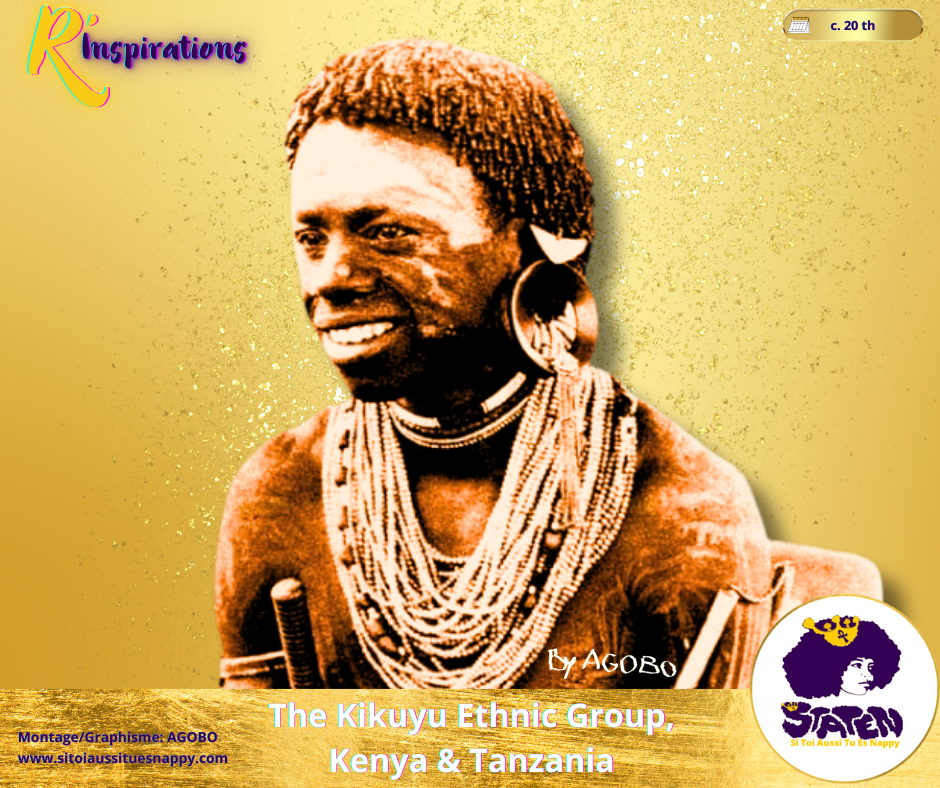
In many cultures, only certain people — due to special gifts , specific social status , specific beliefs , or belonging to certain ethnic groups — retain this hair condition, often throughout their lives or from a certain age.
Even today, locs are also a fashion or hairstyle, used by some people as a way to take advantage of the “ease” of maintenance and styling of curly or kinky hair.


For people who keep their locs loose, with or without an initial base, their hair reflects the look they wish to achieve with their curls. These curls tie freely, either naturally or according to the person's daily routines.


These locs are called by English speakers "freeform locs" , which can be translated as free-form locs .
In Igbo culture, people with very small, curly hair are considered to be very connected to the Creator and to positive spiritual realms. They are protected and, for those who follow tradition, they are called "Dada Child" throughout their childhood.

The act of touching their hair is considered a blessing. Few people have this right: only the mother or the person raising the child may care for their hair. People give these children many gifts when they meet. Their hair is neither cut nor styled; it is simply left natural until adolescence for some children, or longer for others.
The dreadlocked/locs style has held immense significance throughout history, across cultures, and in fashion. This style allows for the creation of a multitude of diverse hairstyles and looks. Curly hair is truly magical!
STATEN