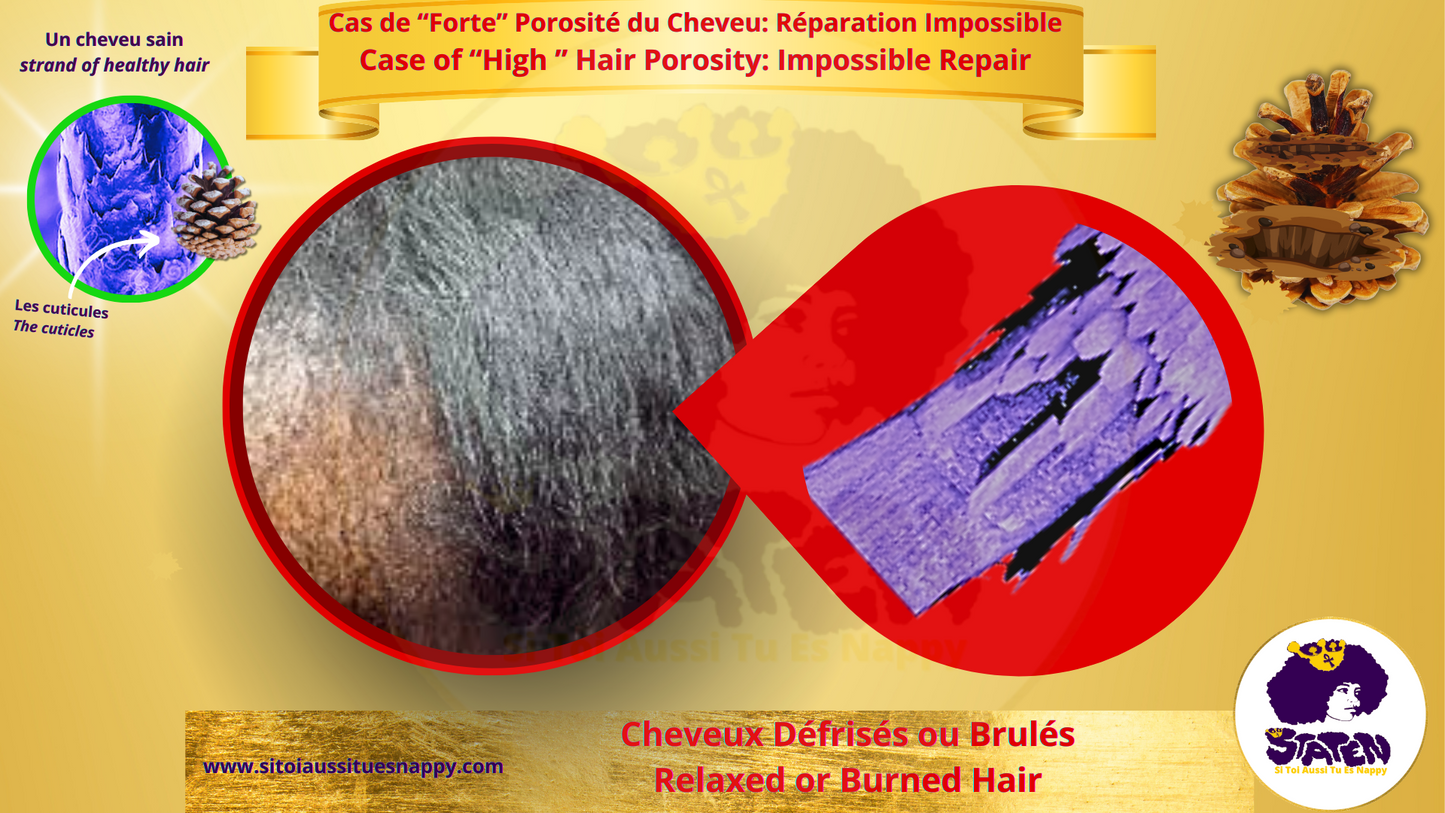
Hair with high porosity


High porosity hair has very open cuticles. Water penetrates easily, but evaporates just as quickly, which makes the hair dry, despite good moisturizing care.
During the porosity test, when the hair falls to the bottom of the glass, it means that the hair has a porosity considered to be high .


For hair care, you can perform all types of treatments depending on the specific needs of your hair.

Deep treatments, such as masks, are often performed with steam baths to allow the treatment to penetrate deeply and open the scales.
Humectants (for example: vegetable glycerin, honey, etc.) help retain hair moisture. Their role is to absorb and retain water, even from the air. It's therefore a good idea to add them to your daily moisturizing routine. This way, regardless of your hair's porosity level at any given time, it will always have moisture available, whether from the air or your hair care products.
The temperature of the water used for moisturizing or washing also influences the opening or closing of the cuticles, as does the climate. Cold water tightens the cuticles, while heat opens them—which is ideal for applying plant-based butters like shea butter or oils like castor oil, particularly suited to humid tropical climates and curly hair.
The limescale present in some water, especially in the West, can clog the cuticles and make hair brittle and dry. The final rinse technique, using mineral or soft water combined with apple cider vinegar or lemon juice, helps to remove limescale and tighten the cuticles.
You can choose between thick oils or plant-based or organic butters, depending on their properties. Options include thick oils (castor, black castor, etc.), plant-based butters (shea, mango, etc.), and organic butters (cow's milk butter). They nourish and condition the hair without locking in moisture, depending on their specific benefits.
Choices regarding changes to hair texture or appearance also influence hair porosity.
For example, hair straightened with an iron has closed cuticles, because the passage of the iron aligns them in the direction of closure, even if steam or heat can open them momentarily.
Certain hair treatments, such as bleaching or straightening, permanently alter the hair and destroy the hair fiber and cuticles. Even the best treatments cannot restore the hair's original structure, but they can help it survive despite this damage.


Because the cuticles are damaged, their natural opening and closing mechanisms are destroyed. This type of hair has high porosity and requires deeper, more frequent care than natural hair.

The healthiest option is to cut the damaged hair once new growth is present and the desired length is reached, or more radically, without waiting.
In any case, if your hair currently has high porosity, don't worry. Natural hair porosity is constantly evolving; nothing is permanent or strictly genetic. Natural hair adapts its cuticles in response to numerous factors, such as climate, handling, styling, and treatments.
The key is to understand your hair and know how to adapt to its needs to facilitate its maintenance and take care of yourself.
STATEN